How we work — and why it takes time.
Most contractors move fast. We move deliberately. What follows is an honest account of how each commission unfolds, from the first material conversation to the last sealed joint.
Material specification
Material specification begins before any slab is purchased. We maintain direct relationships with three importers in the Bay Area and make regular visits to their yards — not to browse, but to understand what is currently available at the quality level we require.
When we begin a project, we present no more than four or five candidates. These are chosen against the specific space: its light, its exposure, what else it touches — the adjacent flooring material, the cabinetry finish, the hardware. A sample that reads well in a showroom can look wrong in context. We review at the site, in the room’s own light, before anything is specified.
Full slabs are sourced before installation is scheduled. Stone availability shifts within weeks. If a material is right for a project, we reserve it. We do not specify a material and then find a substitute when the original is no longer available. Substitution is a form of failure we do not accept.
Hand-cut, not machine-cut
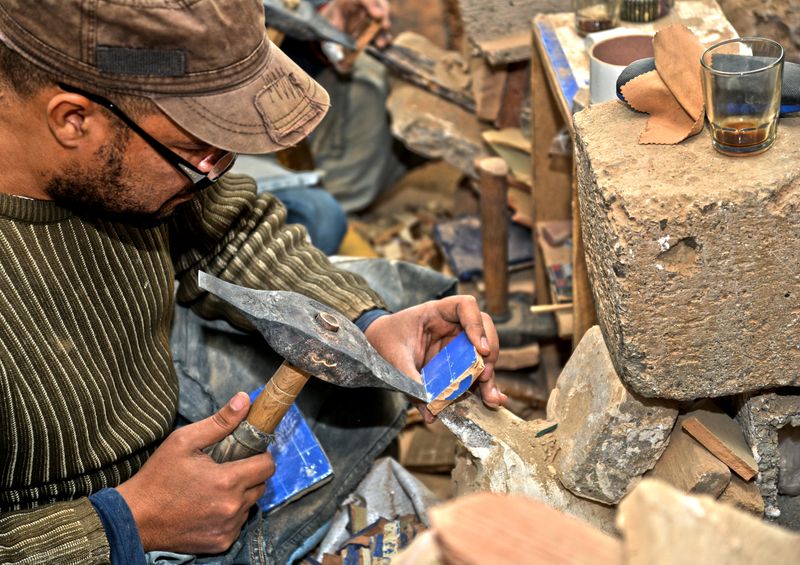
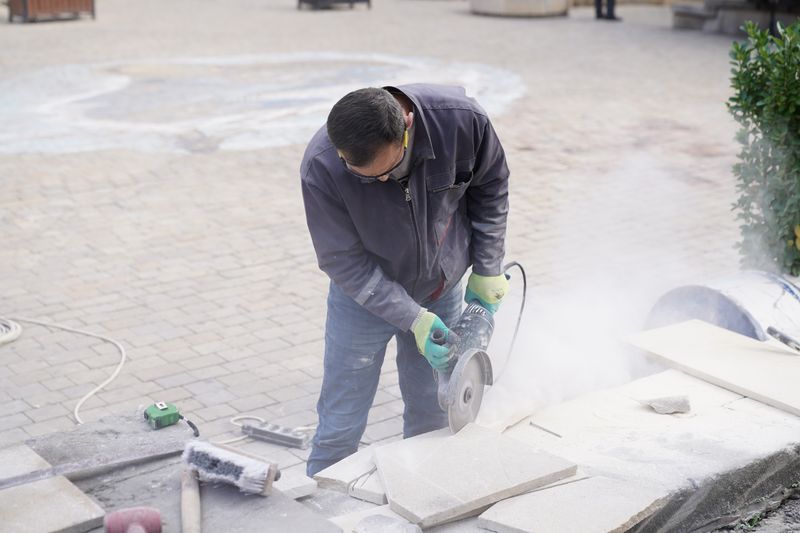
Marco learned to cut stone from his father in Carrara, and his father from his. The distinction matters not as a point of heritage but as a practical statement about accuracy. A water-jet cutter produces a clean square edge. A hand-cut piece, shaped and refined by someone who understands the material, can be fitted within tolerances that machines do not attempt.
In complex spaces — a bathroom where no two walls are plumb, an entry floor where a staircase meets tile at an acute angle — the ability to read the stone and adjust each piece individually is the difference between an installation that looks custom and one that looks corrected.
Our crew is our own. We do not subcontract installation. The people who cut the stone are the people who set it. That continuity — from specification through sealing — is not a matter of efficiency. It is the only way we can guarantee the result.
Time
We take six to ten commissions a year. That is not a marketing posture. It is the maximum number of projects we can complete at the level of care this work requires. When we are on a job, we are on that job — not four others simultaneously.
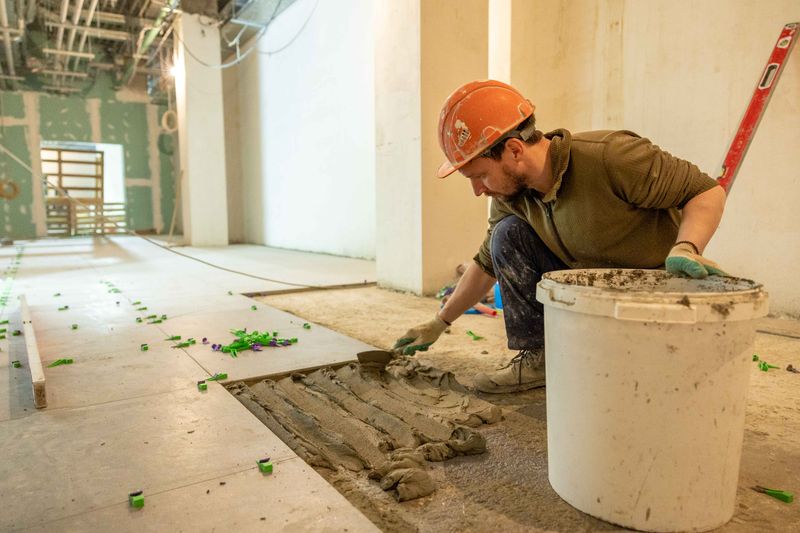
Most projects run twelve to eighteen weeks from signed contract to sealed surface. The timeline includes lead time on material sourcing, substrate preparation — which is often the most consequential and least visible phase of the work — and the setting and curing schedule that determines how the finished surface will perform over decades of use.
We do not rush cure times. We do not skip the dry-lay step to meet a compressed schedule. If a project requires more time than originally estimated, we say so and explain why. The architects who refer their clients to us understand that this is not an inconvenience. It is the standard we hold ourselves to on every commission.
Cost
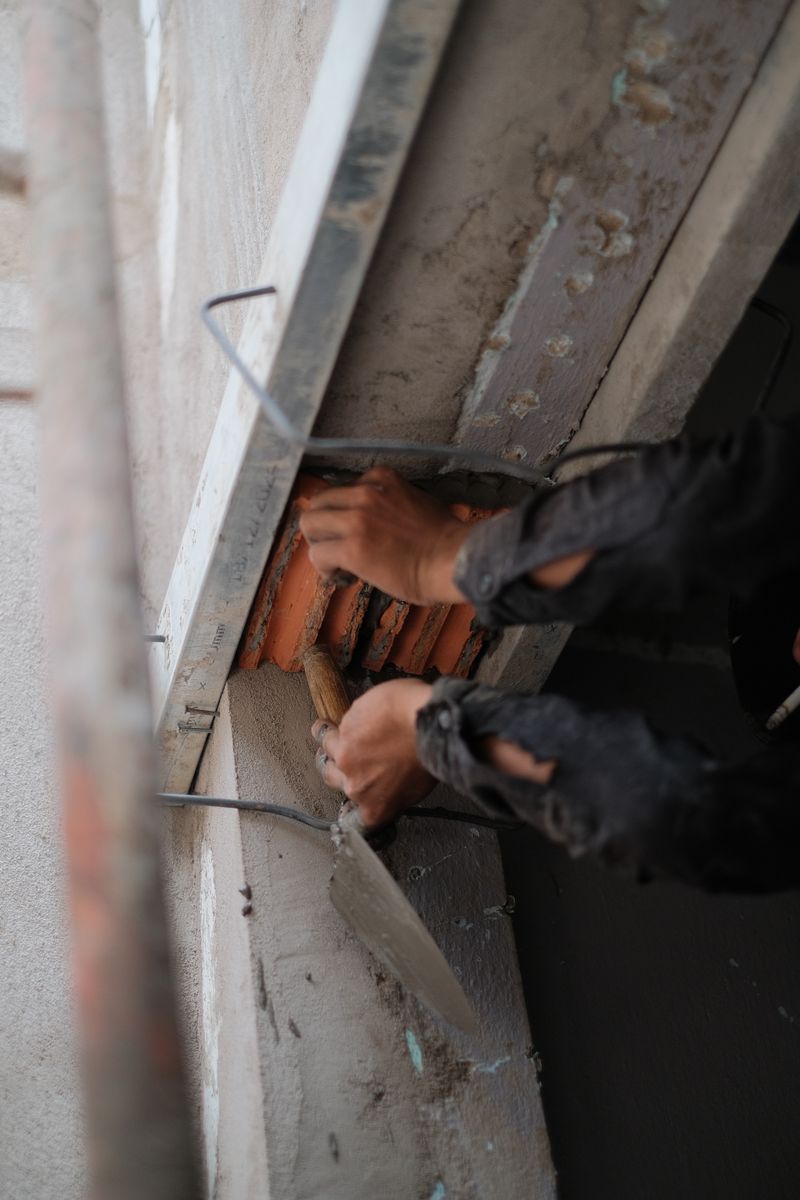
Our projects run from thirty thousand to three hundred thousand dollars depending on scope and material. This range reflects the actual cost of sourcing specific stones through our suppliers, paying skilled tradespeople a wage that keeps skilled tradespeople in the trade, and taking the time required to do the work correctly.
We provide detailed written proposals. The cost of each material, the labor allocation by phase, the project schedule — all itemized and explained. There are no contingency figures buried in the numbers. If we encounter unexpected substrate conditions during preparation, we stop, document what we found, and present options before continuing.
We understand this is not a casual purchase. The architects who refer their clients to us have seen our work across multiple projects. That track record — not our proposal — is the argument for the cost. If you are speaking with us, someone you trust has already made that argument on your behalf.